
A free Parent Research Center resource
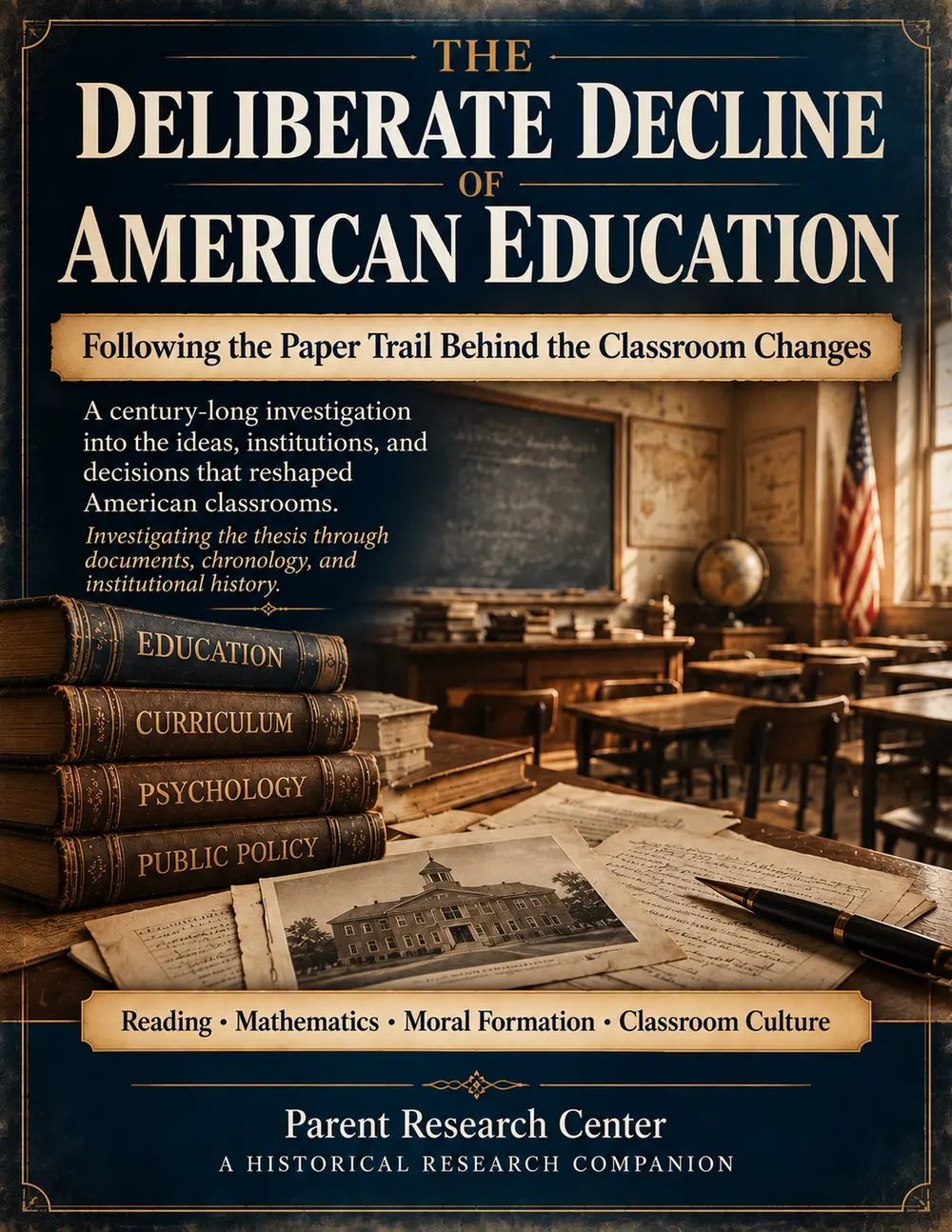
The Deliberate Decline of American Education
A free 17-page visual research companion examining a century of change in reading instruction, practical mathematics, moral formation, and classroom conduct—and tracing how educational ideas moved through research, funding, policy, teacher preparation, and schools.
- Historical timelines and comparison charts
- A named people-and-institutions influence map
- Selected primary sources and five questions parents can ask now
What you’ll discover
What this 17-page guide actually examines
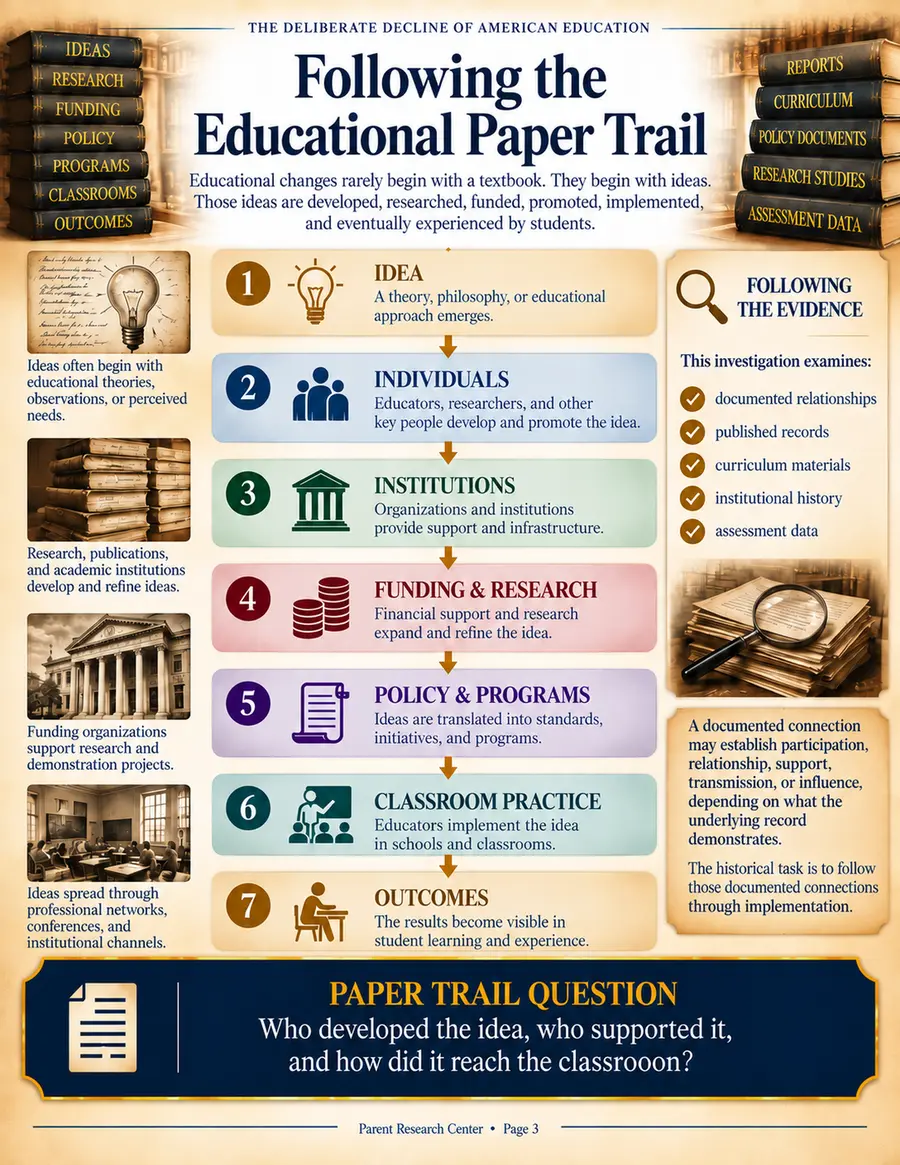
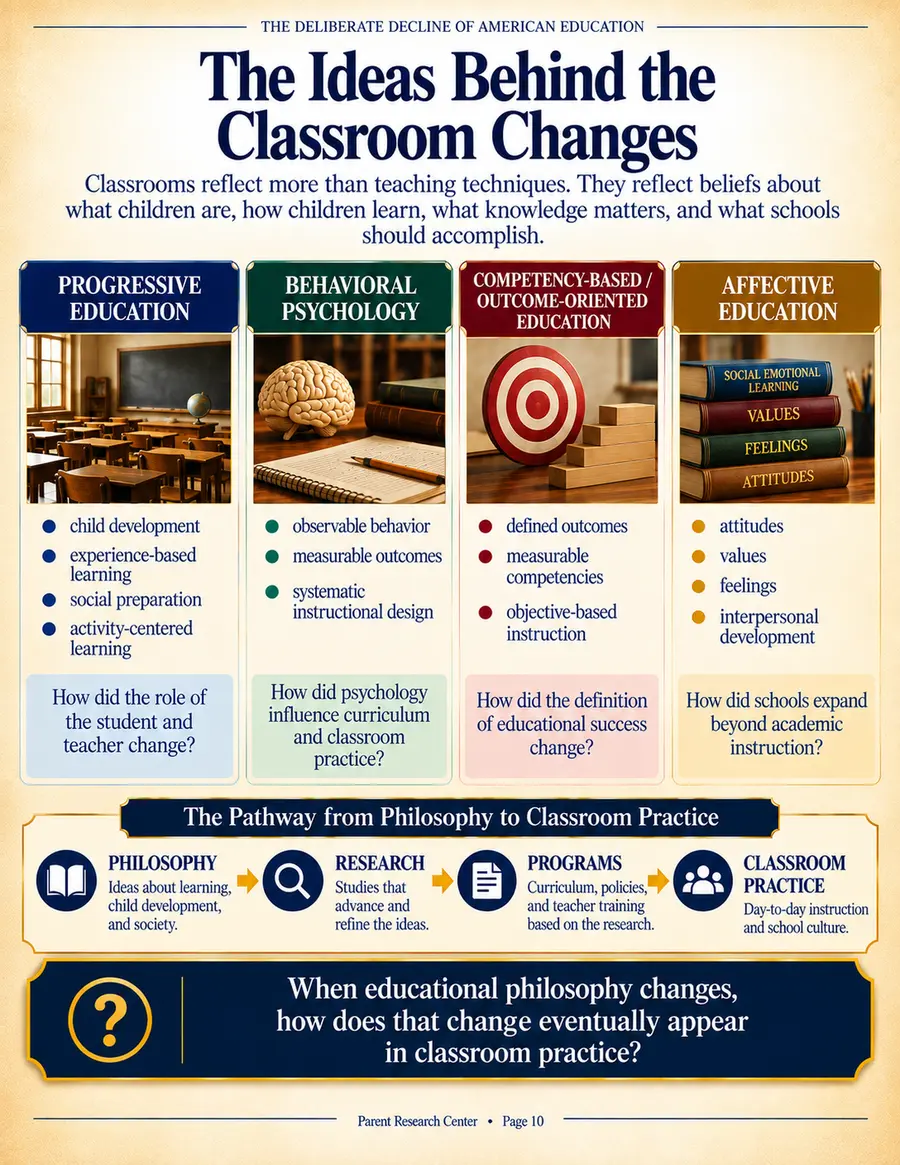
The PDF moves from the early-20th-century classroom baseline to four areas of change, then follows the people, institutions, funding, programs, and policies that carried educational ideas into practice.
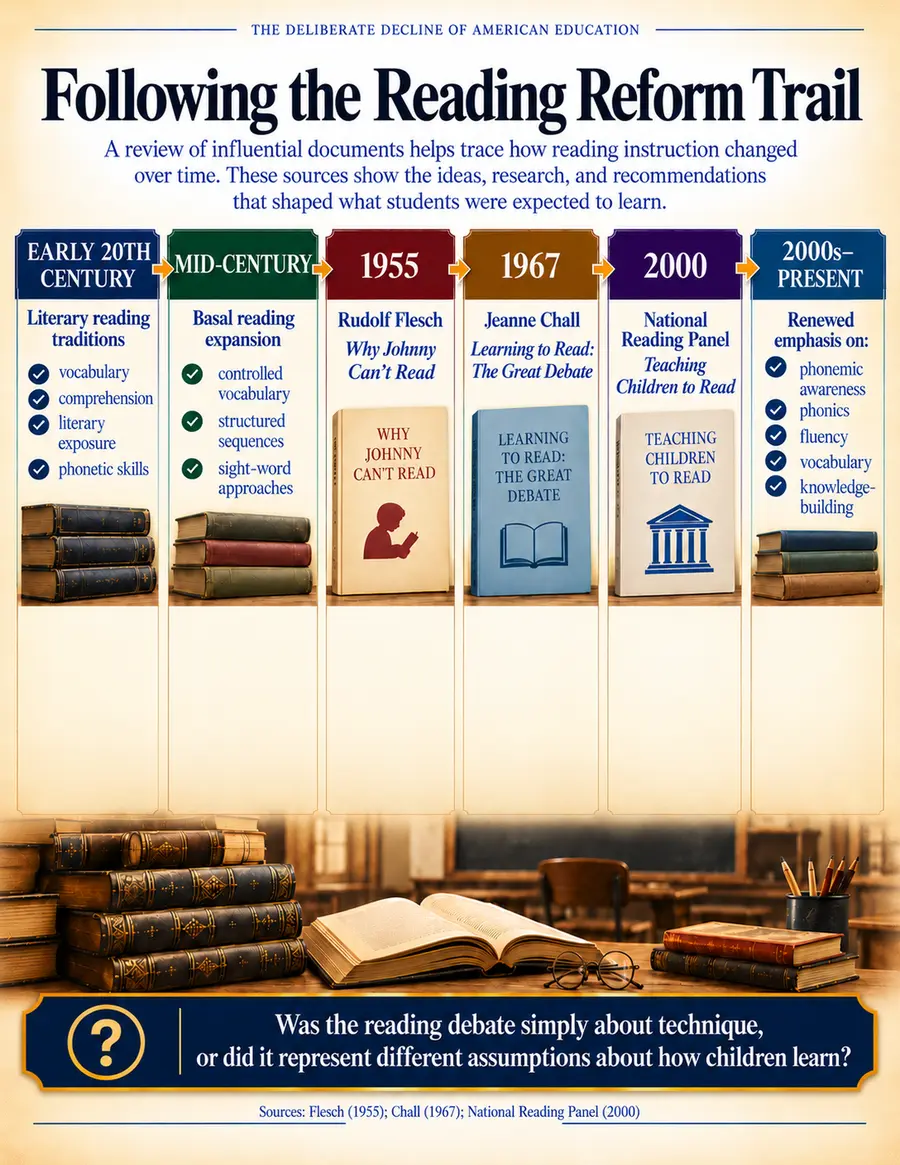
The reading-reform trail
Compare literary readers, controlled-vocabulary basals, sight-word and whole-language approaches, and the later science-of-reading revival through sources including the Elson Readers, Rudolf Flesch, Jeanne Chall, and the National Reading Panel.
What mathematics was preparing children to do
Follow the shift from computation, fractions, measurement, commerce, and household calculations toward changing emphases on abstraction, conceptual understanding, and alternative problem-solving strategies.
How moral formation and classroom conduct changed
Examine the movement from explicit virtue and biblical moral instruction toward pluralistic character education and social-emotional frameworks, alongside changing expectations for authority, responsibility, behavior, and learning conditions.
Who helped move ideas into schools
Study a documented influence map connecting researchers such as Ralph Ojemann, Emory Cowen, Myrna Shure, Roger Weissberg, and Timothy Shriver with universities, foundations, government agencies, professional networks, programs, and classrooms.
Five questions parents can use now
Apply a practical checklist to reading, mathematics, moral formation, classroom culture, and educational philosophy—so you can ask what your child is being trained to do, which assumptions guide the approach, and what evidence supports it.
Inside the resource
Documents, patterns, and questions—assembled for close reading
See representative pages before signing up. The PDF includes a seven-stage paper-trail framework, subject-specific timelines and comparison charts, a named institutional influence map, selected research foundations, and a five-question parent checklist. Its visual trend indices are clearly identified as interpretive historical comparisons—not measured scores.
Why PRC created this
Parents deserve access to the record
Parent Research Center helps families examine educational ideas, claims, institutions, and source documents for themselves. This guide was created to make a complicated historical record easier to enter without flattening its complexity.
It is an invitation to read carefully, distinguish evidence from assertion, and form conclusions with greater confidence.
Receive the free PDF
Send me the guide
Receive the complete 17-page illustrated PDF: four subject-area investigations, historical timelines, selected sources, an institutional influence map, and five questions parents can use now. Your personal download link will appear immediately and will also be sent to your inbox.
Begin with the documents. Follow the evidence.
Receive the complete PDF and examine the reading, mathematics, moral-formation, classroom-conduct, and institutional evidence assembled inside.