
Paid Research Guide · HN-RC-EDU-002
Educational Philosophy Decoder
Understanding the Ideas Behind Modern Schooling
Understand the Ideas Before You Judge the Methods
Educational programs can look very different on the surface while being built on surprisingly similar assumptions underneath.
The Educational Philosophy Decoder helps parents look beyond curriculum labels, teaching methods, and educational trends to examine the deeper questions:
Rather than telling parents which educational philosophy they must accept, this guide gives them the language and framework to recognize the major ideas shaping modern education and evaluate them for themselves.
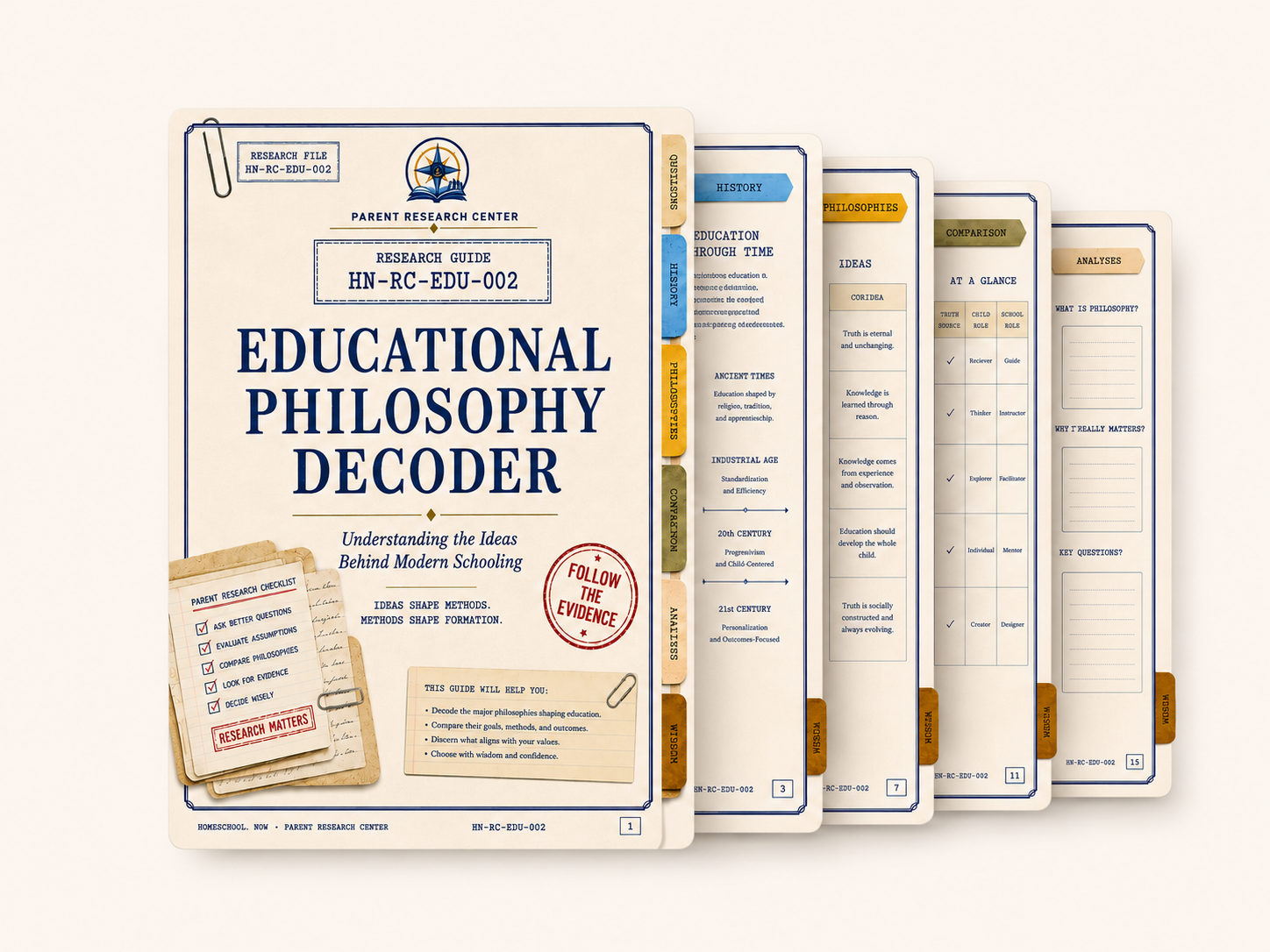
What parents will explore
- Classical, traditional, progressive, behaviorist, constructivist, mastery-based, outcome-based, competency-based, personalized, workforce-aligned, technology-centered, and AI-mediated education
- The historical setting behind each philosophy
- How each approach views the child, knowledge, the teacher, society, and educational success
- What these philosophies actually look like in practice
- Strengths worth recognizing—not merely criticisms
- Questions Christian parents should ask before adopting a curriculum, program, or educational method
- A practical Parent Decoder worksheet for evaluating educational materials themselves
- A comparison matrix for seeing similarities and differences across major approaches
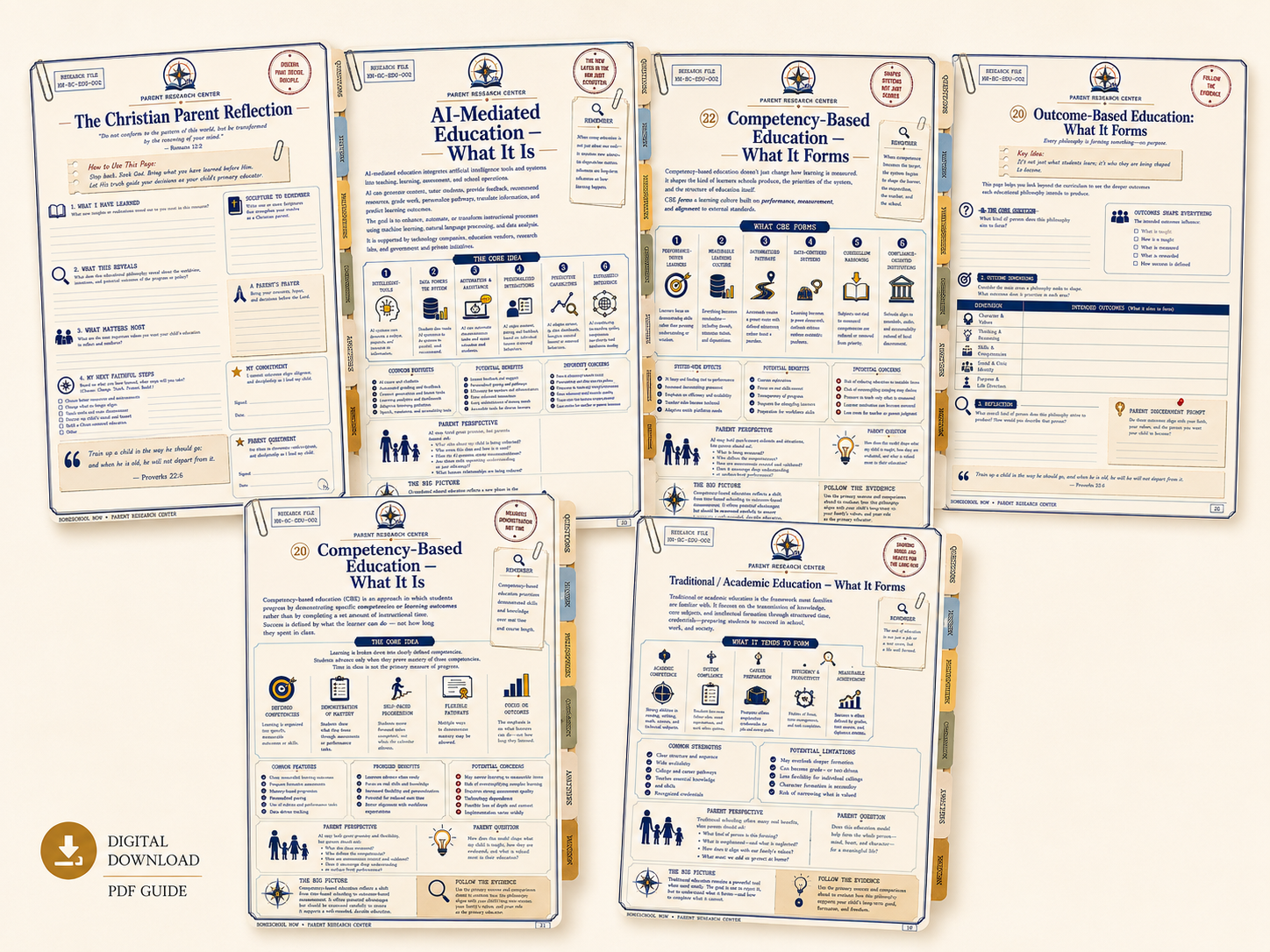
A framework for looking beneath the label
The guide helps parents move from unfamiliar terminology to concrete evaluation.
Recognize the assumptions
Identify what an approach believes about knowledge, childhood, authority, learning, society, and success.
See it in practice
Connect abstract philosophy to curriculum design, classroom methods, assessment, technology, and educational language.
Evaluate fairly
Notice legitimate strengths while keeping limitations, tradeoffs, and formation questions visible.
Reach your conclusion
Use the Parent Decoder worksheet and Christian reflection questions to judge whether an approach belongs in your child’s education.
A method tells you how something is taught. A philosophy tells you why.
Who it is for
Especially useful for parents choosing homeschool curriculum, evaluating alternative educational models, interpreting school terminology, or simply trying to understand why modern education works the way it does.
Curriculum is never just technique. Behind every educational approach are assumptions about knowledge, authority, childhood, success, and human development. This guide helps parents recognize those ideas before deciding whether they belong in their child’s education.
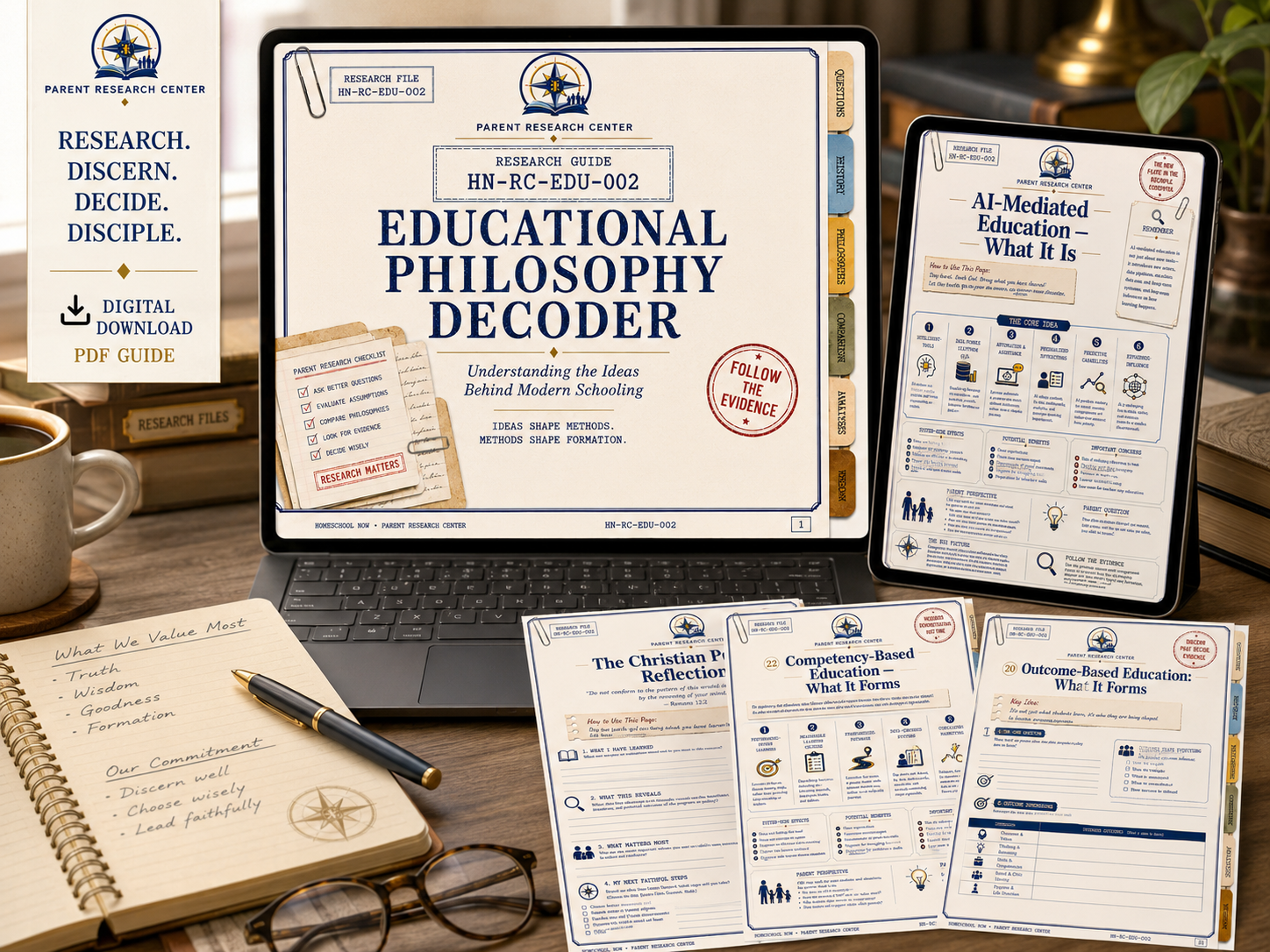
Know what’s underneath the method.
Get the Educational Philosophy Decoder
$12 Digital research guide
Purchase the DecoderPurchase securely through Parent Research Center. Your PDF download will be available after payment is completed.