

Investigation 006 · Evidence Board
School Facial Recognition & Biometrics
Investigation 006 Evidence Board and Primary Source Archive
Evidence Board
EB 01 Documented History
A 1966 man-machine facial-recognition experiment used 2,000 photographs and approximately 40,000 comparisons.
Qualification: This is historical context for testing, not evidence that current school systems operate like the 1966 experiment.
Source: SRC-01
EB 02 Federal Definition
FERPA regulations define a biometric record as measurable biological or behavioral characteristics used for automated recognition, including fingerprints, iris patterns, voiceprints, DNA sequence, facial characteristics and handwriting.
Qualification: The definition identifies a category of personally identifiable information when maintained in education records; it does not itself create a universal federal prior-consent rule for every school collection.
EB 03 Documented Use Cases
School biometric uses can include identity verification, device or facility access, attendance, lunch payment, testing authentication and security identification.
Qualification: One-to-one verification and one-to-many identification create different operational and privacy risks.
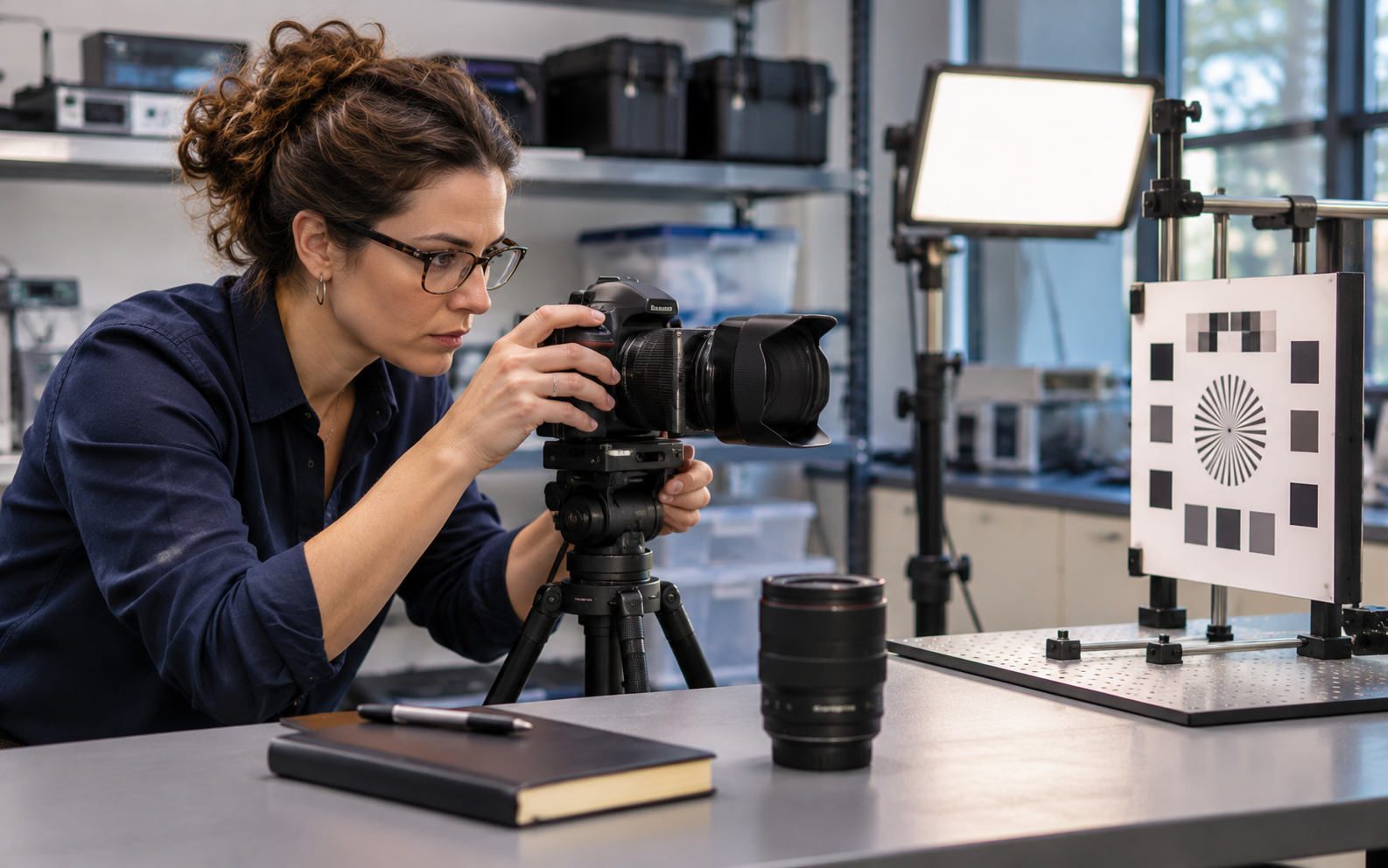
EB 04 Federal Lab Test
NIST found elevated false positives in children, with larger effects in the youngest children, across the tested datasets and algorithms, while the magnitude varied.
Qualification: The 2019 result is not an error rate for every current vendor or school deployment.
Source: SRC-04
EB 05 Federal Synthesis
GAO concluded in 2024 that laboratory accuracy has improved, especially for facial recognition, but major gaps remain in understanding real-world performance.
Qualification: GAO reviewed literature and interviewed stakeholders; it did not conduct a national census of school use.
Source: SRC-05
EB 06 State Public Survey
New York’s 2022 public survey received 995 complete and 1,072 partial responses, and the state report described the response as overwhelmingly against school use of facial recognition and other biometric-identifying technology.
Qualification: This was an open stakeholder survey, not a probability sample representative of all New York parents or schools.
Source: SRC-06
EB 07 Binding State Order
The New York education commissioner ordered that no school in the state may purchase or use facial recognition unless a superseding order is issued.
Qualification: The order permits local decisions about non-facial biometrics subject to privacy, civil-rights, effectiveness and parental-input considerations.
Source: SRC-07
EB 08 Enacted State Law
Colorado’s 2025 law generally prohibits school facial-recognition contracts but permits defined curriculum and emergency-security exceptions with opt-in consent or notice, restricted access and an 18-month retention ceiling.
Qualification: The consent rules differ by use and grade; the security exceptions do not create a general authorization for routine identification.
Source: SRC-08
EB 09 State Statute
Illinois school districts that collect student biometric information must adopt a policy that includes written consent, discontinuation and destruction rules, and cannot deny otherwise available services because consent was withheld.
Qualification: The Illinois provisions do not establish a nationwide rule and should be checked against the current statutory text before publication.
Source: SRC-09
EB 10 Federal Policy
The FTC warns that biometric databases can attract malicious actors and that unexpected collection, poor vendor oversight and unsupported accuracy claims can contribute to unfair or deceptive practices.
Qualification: The FTC Act analysis applies to covered commercial conduct; it is not a school-specific FERPA rule.
Source: SRC-10

EB 11 Federal Regulatory Finding
FERPA may permit disclosure to a contractor treated as a school official if the contractor performs an outsourced institutional function, remains under school control and follows use and redisclosure limits.
Qualification: Whether a particular vendor relationship qualifies depends on the contract, control, annual notice, legitimate educational interest and actual data practices.
Source: SRC-03
EB 12 Qualified Independent Track
Independent writers including Whitney Webb and John Klyczek warn that biometric surveillance can expand institutional power over children, but their asserted motives and system-level conclusions are not substituted for primary-source findings.
Qualification: Use these sources to identify questions and source trails, not to claim a coordinated intent or predict a specific school program.
Primary Source Archive
SRC-01 A Condensed Modern History of Biometric Testing in the US
National Institute of Standards and Technology hosted presentation | Historical survey; accessed November 4, 2026
Pinpoint PDF slide 3; lines 22-34
Read SRC-01 A Condensed Modern History of Biometric Testing in the US
Evidence role Verified historical context
SRC-02 Biometric Record
U.S. Department of Education Student Privacy Policy Office | Current; accessed November 4, 2026
Pinpoint 34 CFR 99.3; page lines 8-12
Evidence role Federal regulatory definition
SRC-03 Family Educational Rights and Privacy Act Regulations
U.S. Department of Education Student Privacy Policy Office | Current; accessed November 4, 2026
Pinpoint 34 CFR 99.3, 99.30 and 99.31(a)(1)
Read SRC-03 Family Educational Rights and Privacy Act Regulations
Evidence role Federal disclosure and school-official rules
SRC-04 Face Recognition Vendor Test Part 3 Demographic Effects
National Institute of Standards and Technology | December 19, 2019
Pinpoint NISTIR 8280, executive summary page 8; lines 193-198
Read SRC-04 Face Recognition Vendor Test Part 3 Demographic Effects
Evidence role Federal laboratory evaluation
SRC-05 Biometric Identification Technologies Considerations to Address Information Gaps and Other Stakeholder Concerns
U.S. Government Accountability Office | April 2024
Pinpoint GAO-24-106293, highlights pages 1-2 and education vignette pages 39-42; lines 17-32 and 696-720
Evidence role Federal synthesis and school case study
SRC-06 Use of Biometric Identifying Technology in Schools
New York State Office of Information Technology Services | August 7, 2023
Pinpoint Pages 5-6 and 33-35; lines 127-151 and 749-791
Read SRC-06 Use of Biometric Identifying Technology in Schools
Evidence role State school-specific review and survey
SRC-07 Biometric Determination
New York State Education Department | September 27, 2023
Pinpoint Order pages 1-2; lines 21-49
Read SRC-07 Biometric Determination
Evidence role Binding state education order
SRC-08 Senate Bill 25-143
Colorado General Assembly | Approved April 18, 2025
Pinpoint Sections 22-32-150 and 22-30.5-529; PDF pages 2-9; lines 14-59 and 63-111
Read SRC-08 Senate Bill 25-143
Evidence role Enacted state law
SRC-09 Illinois School Code Student Biometric Information
Illinois General Assembly | Current; accessed November 4, 2026
Pinpoint 105 ILCS 5/10-20.40 and 34-18.34
Read SRC-09 Illinois School Code Student Biometric Information
Evidence role State statutory requirements
SRC-10 Policy Statement on Biometric Information and Section 5 of the FTC Act
Federal Trade Commission | May 18, 2023
Pinpoint Policy factors; press-release lines 11-26
Read SRC-10 Policy Statement on Biometric Information and Section 5 of the FTC Act
Evidence role Federal consumer-protection policy
SRC-11 Ashton Kutcher’s NGO Supplies Police with Free CIA-linked Surveillance Tool to Protect Kids
Whitney Webb, Unlimited Hangout | July 30, 2020
Pinpoint Independent investigation; facial-recognition and child-protection claims screened
Evidence role Qualified independent source trail
SRC-12 Education Expert on New School World Order
John Klyczek profile and claims, Special Guests | July 22, 2026
Pinpoint Lines 30-54; biometric-surveillance claim screened
Read SRC-12 Education Expert on New School World Order
Evidence role Qualified independent source trail